Robotic fabrication · MADWORKSHOP & USC · 2020
The Arroyo Bridge
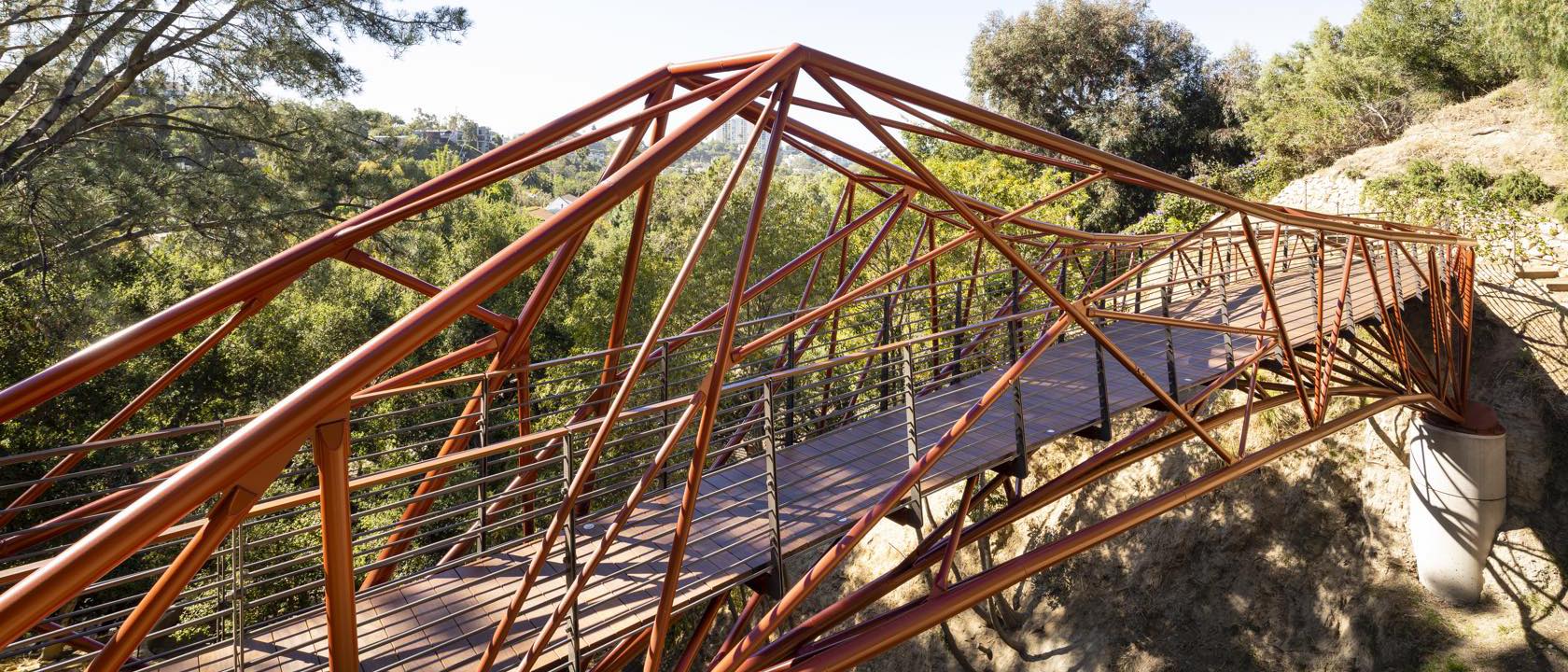
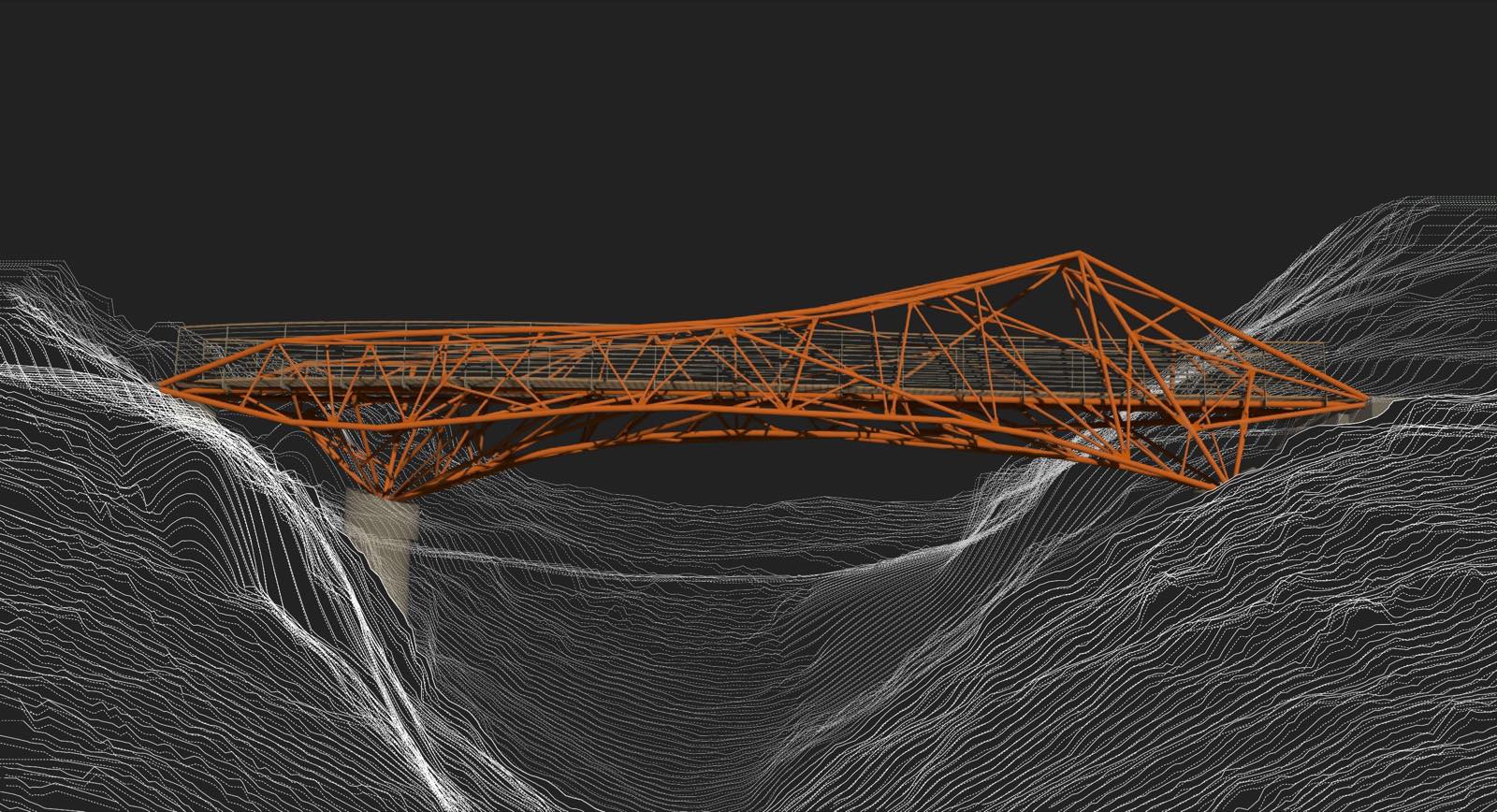
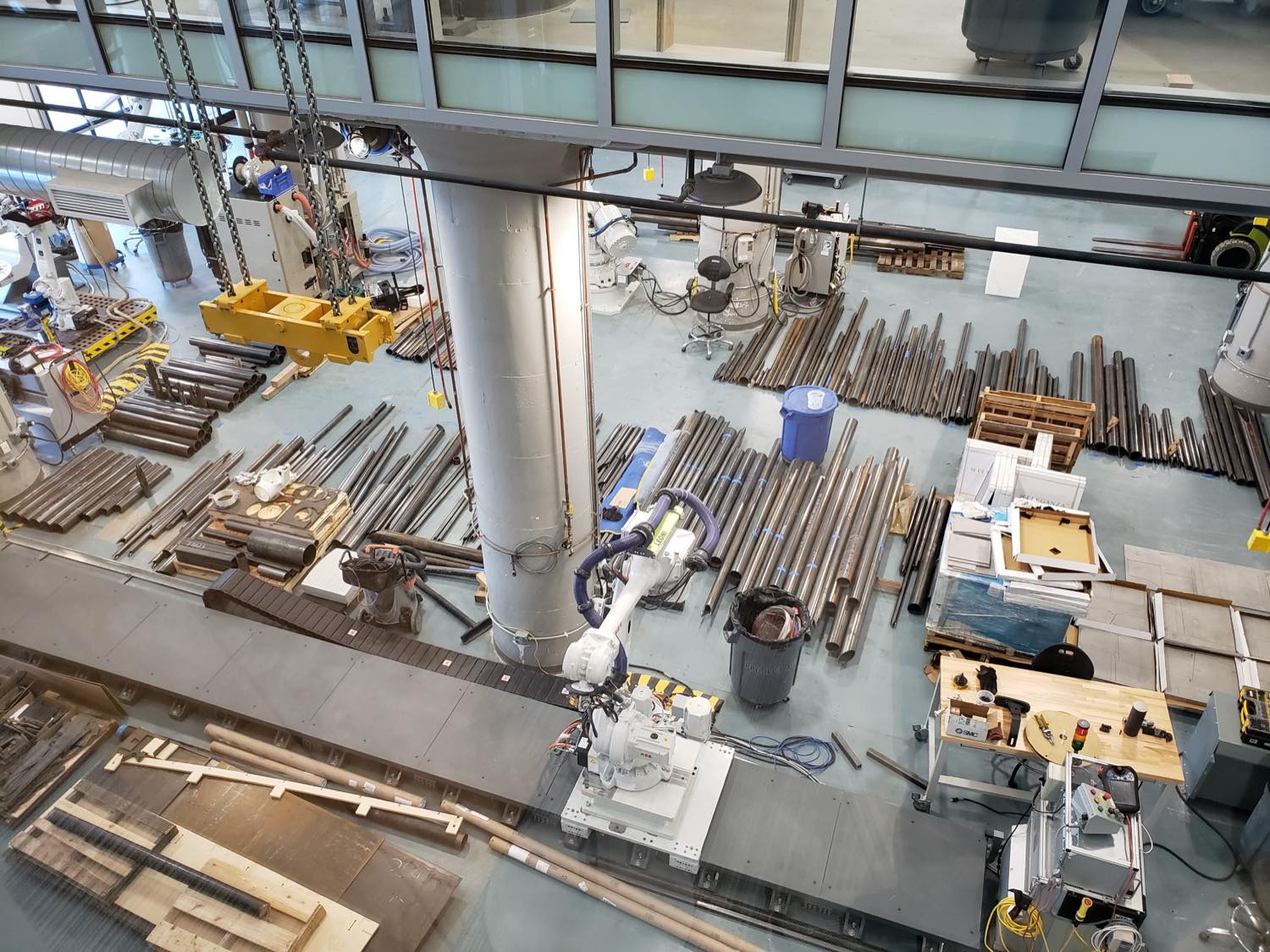
An 80-foot single span across a ravine near Los Angeles, designed by R. Scott Mitchell and built out of a six-year research initiative that began as a student design-build studio at USC in 2014. Its branching lattice, drawn from the vascular structure of leaves and the layered branching of the surrounding eucalyptus, was effectively unbuildable by conventional means: an asymmetrical superstructure of over 600 discrete parts joined by connections no two of which are the same. A six-axis arm held each member in position while master welders made the joins, at the Autodesk Technology Center in Boston. The finished sections were trucked across the country and installed over the ravine.
- Role
- Supported robotic fabrication at the Autodesk Technology Center, Boston
- Team
- Designed by R. Scott Mitchell. MADWORKSHOP and the USC School of Architecture, with the Autodesk Technology Center, Boston
- Numbers
- 80 ft span · 600+ discrete parts · ~18,000 lb of steel · held to within ~1 mm of the digital model · ~1,000 lb waste, recycled · four 35 ft pilings hand-bored into the hillside
- Read more
- Dezeen · Fast Company · The Architect's Newspaper · Metropolis · Autodesk: Collaborative robotics · Mitchell, “The Arroyo Bridge,” ACADIA 2022
Why a robot
Every node in the lattice meets at a different angle, so almost no two cuts or welds are the same. That's the case where a jig-and-fixture workflow collapses and a programmable arm starts to make sense. The setup cost is the same whether the next part is identical to the last one or not.
It stayed a collaboration rather than a handover. The robot did what it is good at, holding a one-off part at an exact angle for as long as it took, and the welders did what they are good at.
Getting it there
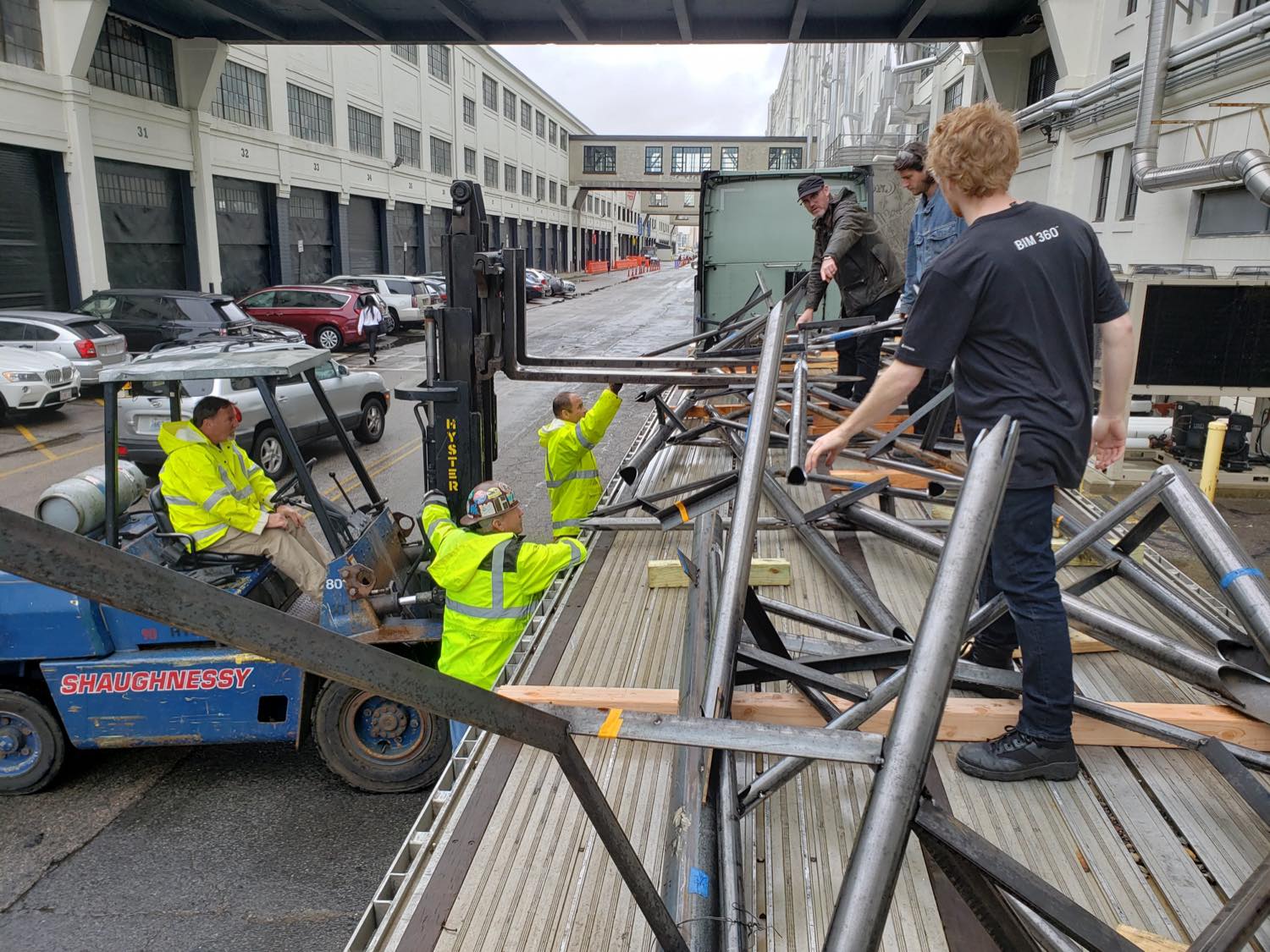
The bridge was built in sections in Boston and assembled on site in Los Angeles, which puts every accumulated fabrication error into a handful of field joints.